

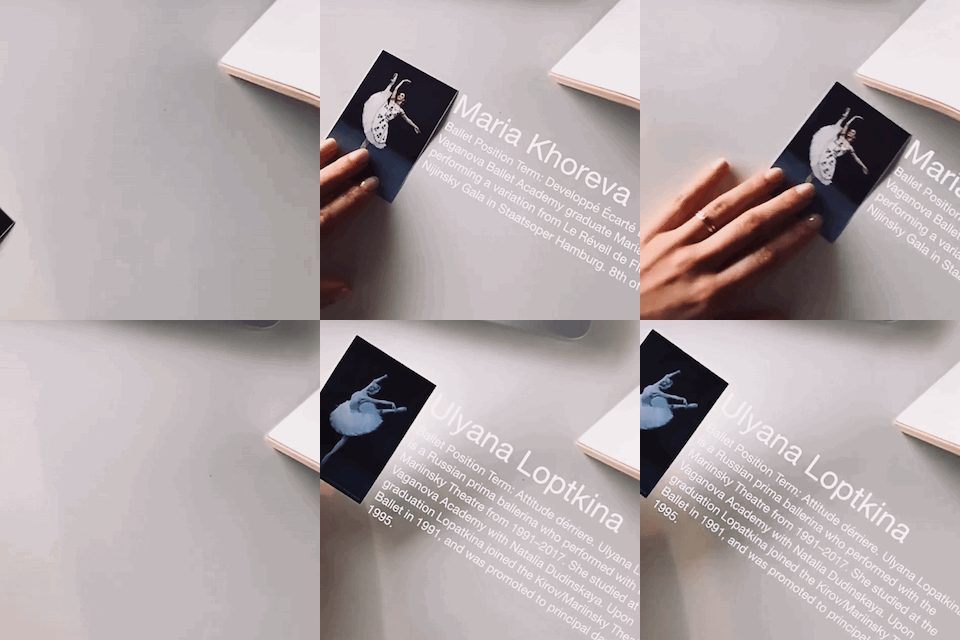
"Painting with Movement" is a transdisciplinary artwork at the intersection of dance, augmented reality, and interaction design. It frames movement as a pictorial act in space, where choreography becomes visible as a living three-dimensional composition.
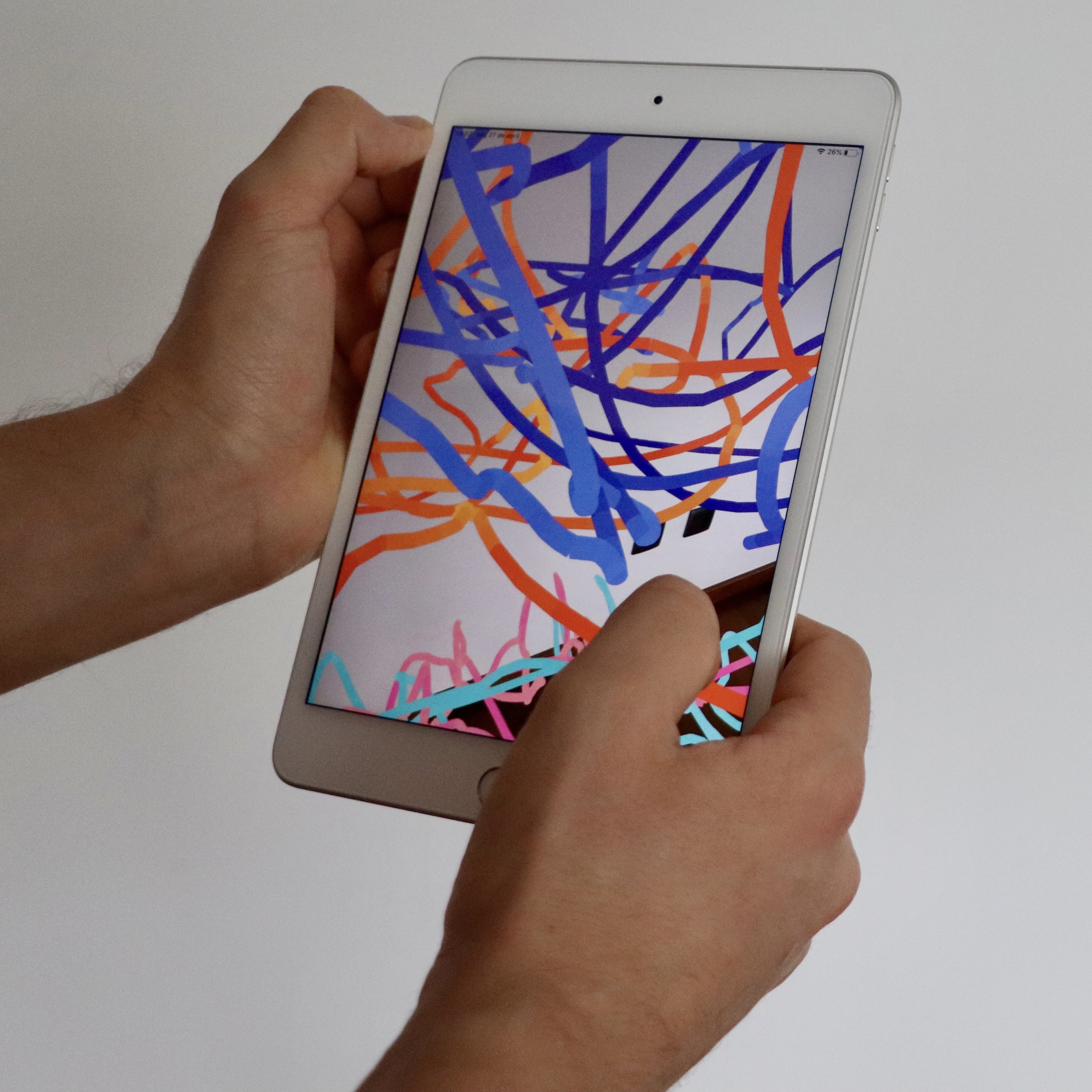
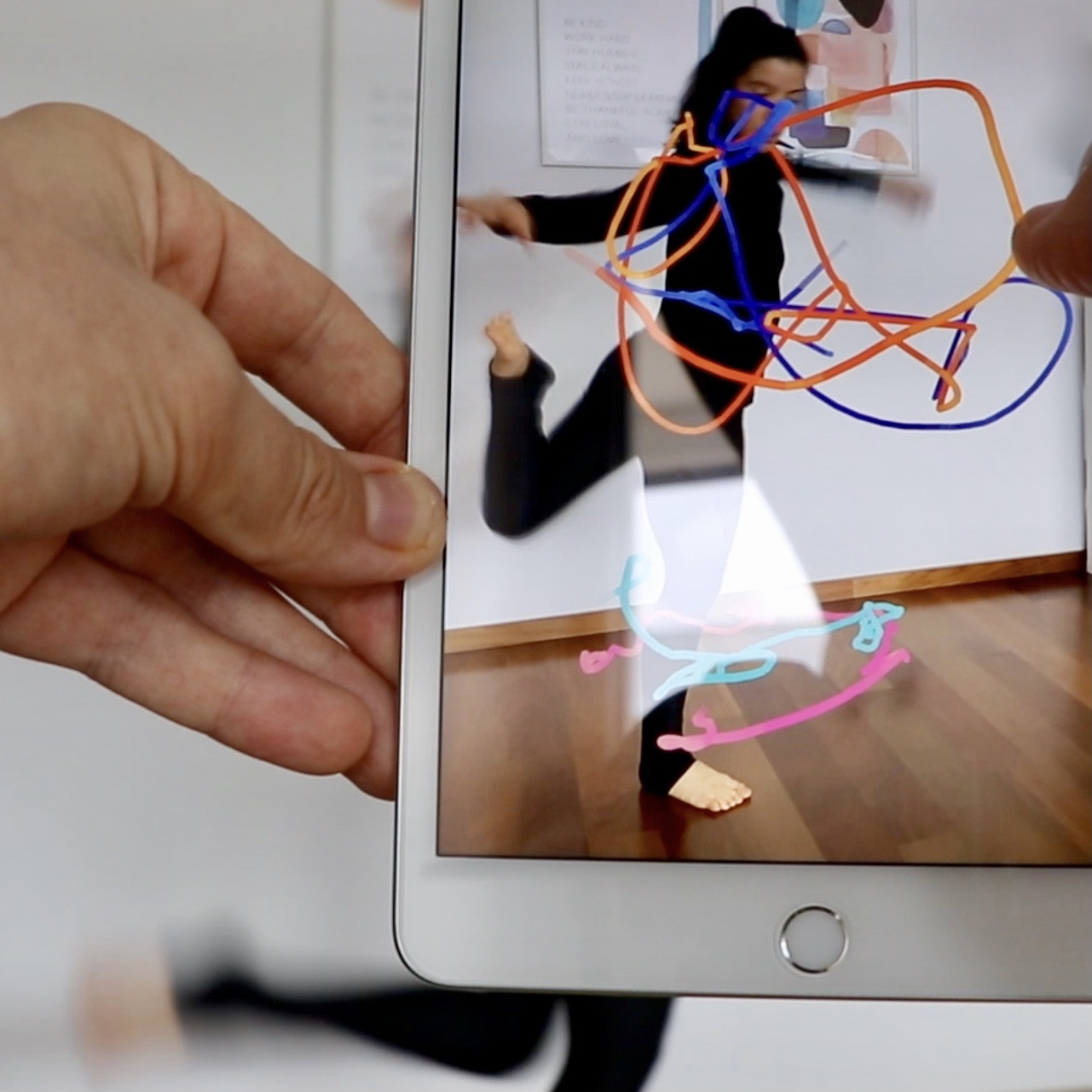
The project enables a dual perspective: one body performs while another observes through a mobile interface, where motion is translated into spatial traces in real time. This relation between performer, observer, and image creates an expanded field of perception in which dance can be read from multiple viewpoints.
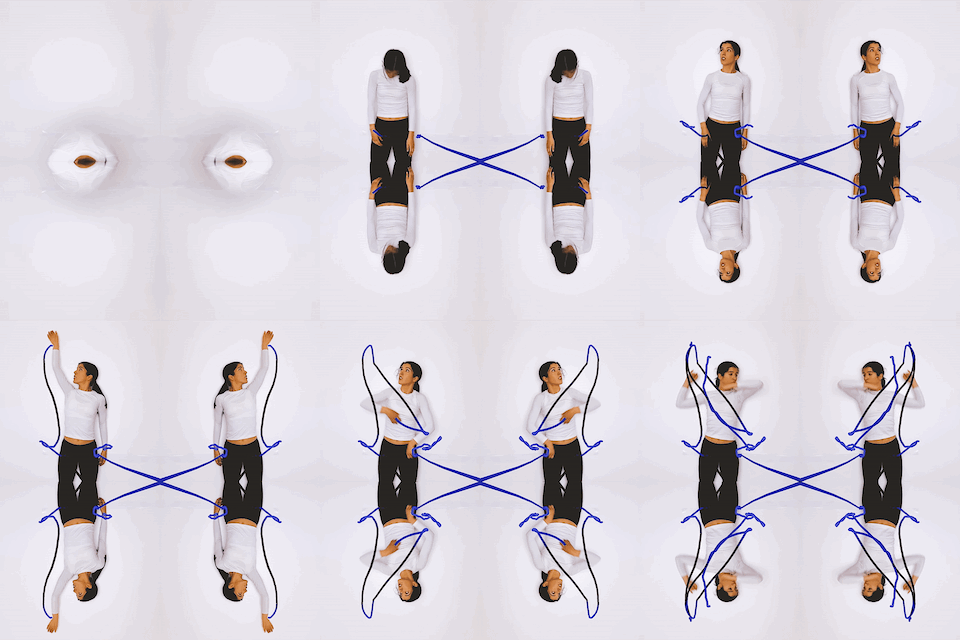
Visual language emerges from simple elements such as line, stroke, and point, generated through body tracking and temporal accumulation. Shape and visual effect respond to movement qualities including speed, amplitude, and intention, allowing each action to form a distinct spatial inscription.
Conceived as an interaction design artwork, the system records trajectories through a smartphone camera and composes them as a dynamic spatial memory. What appears on screen is not a representation of dance after the fact, but a simultaneous visual event in which gesture, duration, and space are co-authored.
The work also reflects on accessibility and inclusion: movement is treated as an expressive continuum rather than a fixed technical standard. By valuing diverse physical vocabularies, the installation opens choreographic authorship to wider publics and invites participants to encounter their own bodies as creative agents.
Positioned between performance, research, and public interaction, "Painting with Movement" proposes a curatorial format where choreography can be viewed, revisited, and interpreted as visual composition. Its continuity across exhibition, education, and artistic practice underscores movement as both material and method.